Recording at home has never been easier, and that is exactly why it stops working. Everyone has an interface and a decent mic now, so a clean home demo no longer stands out. The records that cut through still come out of rooms built for the job. I run Red Mile Records in Calgary, and most artists who book us arrive at the same wall: the song is good, the performance is there, but the recording sounds small next to the references. This is what a professional studio fixes, and what it cannot.
Be clear about the upgrade you are actually buying. You are not paying for a fancier mic. You are paying for a room, a signal chain, and an engineer that turn a good performance into a release that holds up beside major-label tracks on the same playlist.
The room is the part you cannot plug in
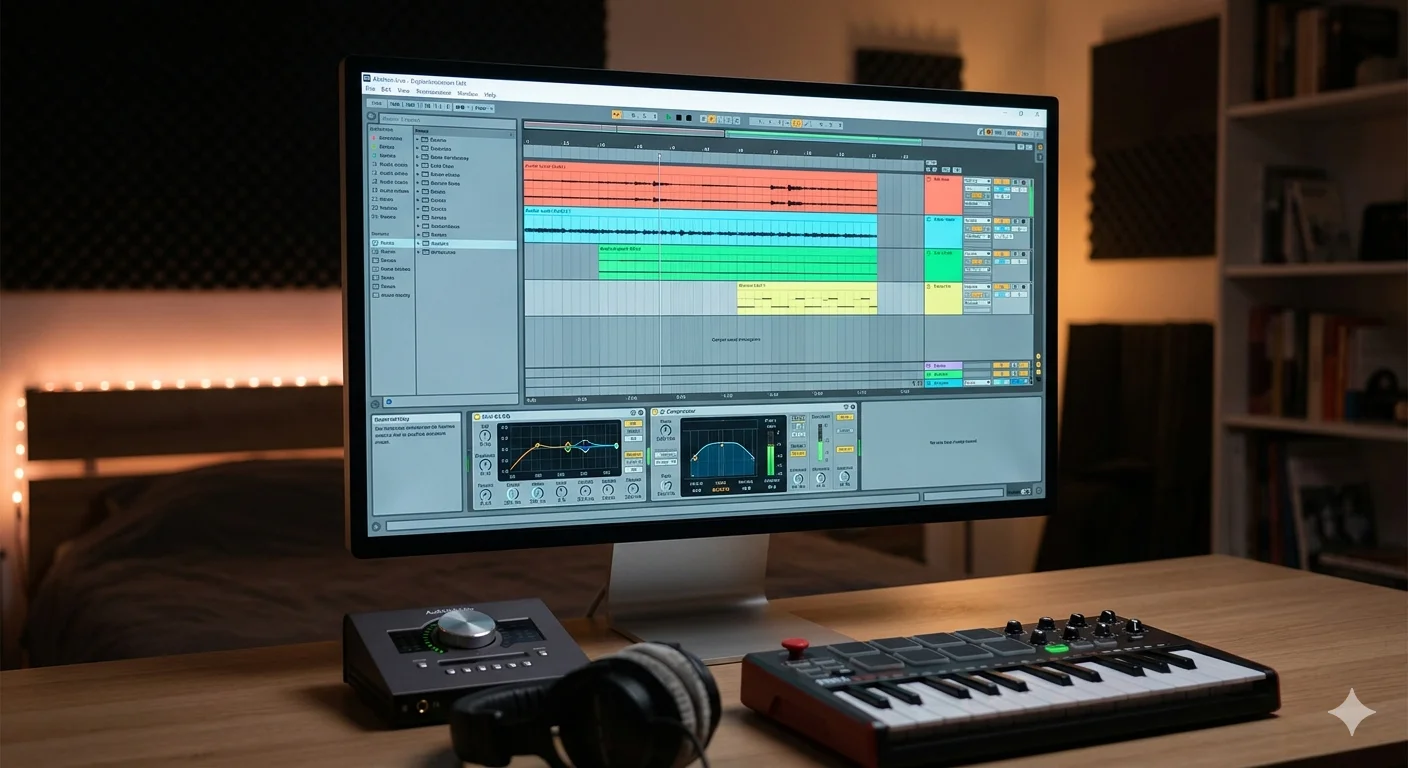
Your talent is not the bottleneck in a bedroom. Your walls are. Parallel drywall surfaces create flutter echo and standing waves, and small rooms pile up boomy, uneven low end. No plugin removes a room from a recording after the fact, because the reflections are baked into the file the moment you hit record. You are stuck mixing a vocal that already has the bedroom printed into it.
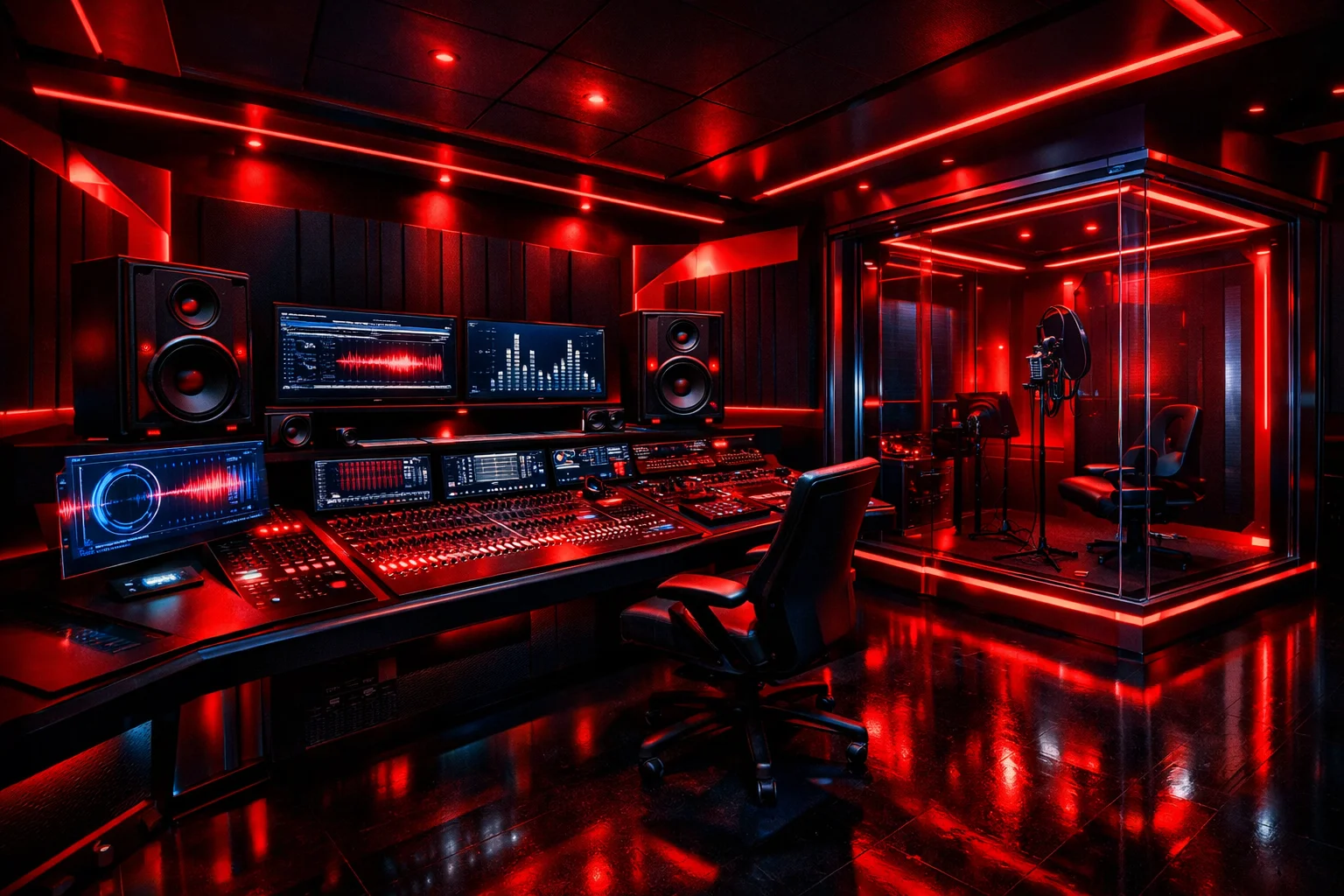
A treated studio solves this at the source. Our live and vocal spaces use floor-to-ceiling bass traps in the corners, first-reflection panels at the mirror points, and an angled ceiling cloud above the listening position. The result is a dry, controlled capture where the only thing on the recording is you. That clean starting point is what lets a mix sit forward and translate from phone speakers to a car on Deerfoot to studio monitors. We go deeper on this in what makes a studio recording the best today.
The signal chain a home setup cannot match
A $200 microphone into a budget interface captures the idea. It does not capture the detail, the headroom, or the front-to-back depth that a professional chain does. At Red Mile your voice runs through a Neumann U87 Ai or TLM 103, into a Neve 1073LB or an Avalon 737SP preamp, and finally a Universal Audio Apollo X6 converter. Each link adds clarity and control the consumer version flattens out. We monitor on Yamaha HS8s in a treated room, so what you hear while tracking is the truth, not a guess colored by a bad room.
Gear alone is not the point though. The point is what a clean, detailed capture lets you do later. A vocal recorded through that chain takes EQ and compression without falling apart, which is the whole reason it survives a competitive master.
The engineer is the part nobody budgets for
When you record yourself, you split your brain three ways: performer, engineer, and critic. Nobody does all three well at once. An engineer takes two of those jobs off you so you can focus on the take. We handle mic placement, gain staging, comping, and the technical decisions in real time, and we push you for the take that is actually great instead of the one you settled for at 1 a.m. because you were tired of resetting the session.
There is a real shift that happens too. The bedroom is where you relax. The studio is where you work. Artists give sharper, higher-energy performances the moment they step into a room built for it, and a better performance beats better gear every single time.
Mixing and mastering that holds its own on streaming
Spotify, Apple Music, and YouTube all normalize playback, so a quiet, untreated mix plays back thin and far away next to a professional one. Getting your track mixed and mastered properly is what lets it keep its punch and clarity when it follows a major-label song on a playlist. If you want the technical detail, we break down loudness and streaming targets in our guide to professional loudness.
Podcasts live and die on audio quality
The same gap shows up in spoken word. Listeners forgive a lot, but they do not forgive a thin, echoey, hum-filled podcast, and they leave in the first minute. A dedicated Calgary podcast studio gives you broadcast-quality sound with no room echo and no background noise, plus a clean modern backdrop for video episodes and social clips that make your show look as professional as it sounds.
When home recording is the right call
I will not pretend you need a studio for everything. Home setups are perfect for writing, for working out arrangements, for cutting scratch vocals, and for stockpiling ideas. Use that freedom. The move is to write and demo at home, then bring the songs worth releasing into a room that can do them justice. If you are weighing the decision, our guide to the best recording studio in Calgary breaks down which studios fit which kind of project.
About the author: Matthew Redenbach is the owner and engineer at Red Mile Records, a professional recording studio, podcast studio, and music marketing company at 1865 17 Ave SW in Calgary's Beltline. He has recorded and produced for Calgary and national artists including Matthew Douglas, JRDN, and Jhrted.
Frequently asked questions
Can I get professional results recording at home?
You can write and demo at a professional level at home, but the room is the ceiling. Untreated walls print echo and uneven low end into the file that no plugin can remove. For releases meant to compete on streaming, a treated room and a proper signal chain make the difference you can hear.
Is a recording studio worth the money for an independent artist?
For the songs you actually plan to release, yes. You are paying for a treated room, a professional signal chain, and an engineer who pulls a better performance out of you. Many artists use home setups to write and demo, then book studio time only for the tracks worth releasing, which keeps the budget sensible.
How much does recording at Red Mile Records cost?
Sessions start at $75 per hour at our studio at 1865 17 Ave SW in Calgary's Beltline, covering the room, the gear, and an engineer. You can book a single session for one song or block time for a project. Reach out and we will scope it to your budget.
What should I prepare before my first studio session?
Know your songs cold, warm up your voice, and bring reference tracks that sound like the result you want. Arrive with your arrangement settled so studio time goes to performance and capture rather than songwriting. We handle the technical side once you are in the room.