To start a video podcast in 2026 you need four things: a microphone per person, at least one camera, a lighting setup, and a format you can repeat every week. Expect to spend $1,500 to $8,800 CAD building your own setup, or $40 to $150 per hour renting a studio that already has one. The format is the part most people skip, and it is the part that decides whether the show survives.
Everything below is the practical version: what the gear actually costs, what you can skip, how the filming session runs, and what happens to the footage afterward. We produce video podcasts weekly at Red Mile Records, so the numbers here are the ones we work with rather than a rounded-up wish list.
Why Video Is No Longer Optional
Podcasting quietly stopped being an audio medium. As of October 2025, 53 percent of new weekly podcast listeners in the US said they prefer watching a podcast rather than only listening, up from 30 percent in April 2022. YouTube is now the most-used podcast platform for roughly 42 percent of weekly US listeners, ahead of Spotify and Apple Podcasts individually.
Spotify's own video library passed 330,000 shows by early 2025, up from around 100,000 in 2023, and more than 270 million Spotify users have watched a video podcast at least once. The platforms moved first, and the audience followed.
The practical consequence for a new show is simple. An audio-only podcast gets found through podcast apps, where discovery is weak and almost entirely driven by charts and word of mouth. A video podcast gets found through YouTube search, YouTube recommendations, and short-form clips on Instagram, TikTok, and Shorts. You are not choosing between audio and video. You are choosing between one distribution channel and five.
What You Actually Need to Record a Video Podcast
Gear lists for podcasting tend to be written by people selling gear. Here is the honest version, in the order that matters.
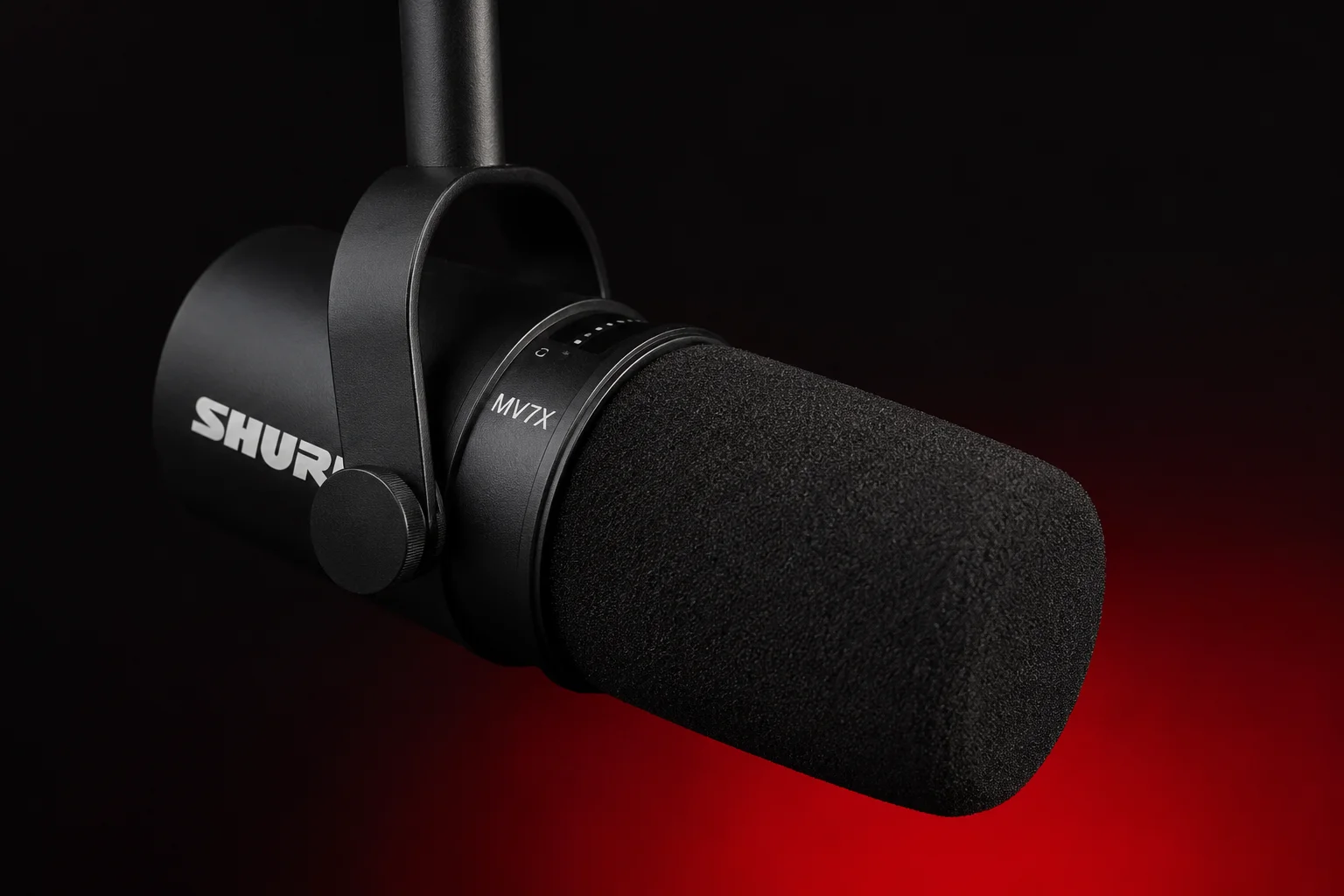
Microphones come first. People will forgive mediocre video. They will not forgive bad audio. They leave within thirty seconds. Use one dynamic microphone per person, positioned a fist's distance from the mouth. The Shure MV7X and SM7B are the two most common choices for a reason: they reject room noise well, which matters enormously if you are recording anywhere that is not acoustically treated.
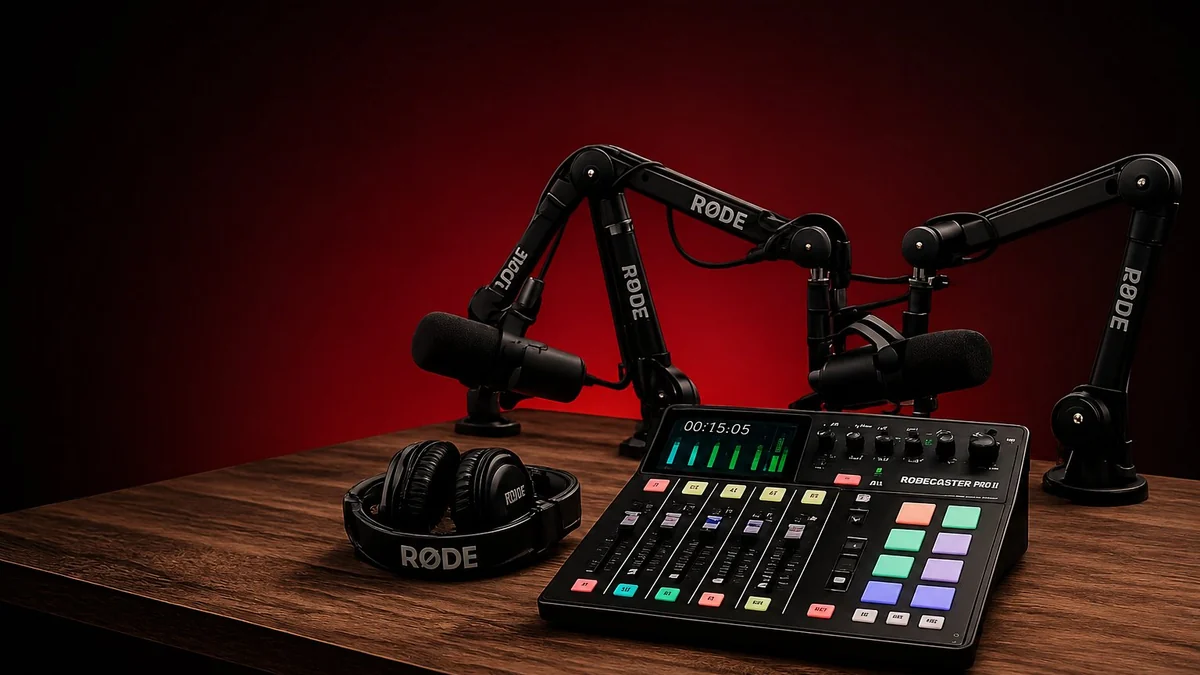
Then the mixer or interface. A RodeCaster Pro II or similar podcast mixer handles multiple mics, gives each person a headphone feed, and records isolated tracks per speaker. Isolated tracks are the detail that separates an editable podcast from an unfixable one. If one guest coughs over your best answer of the episode, separate tracks let you remove it. A single stereo mixdown does not.
Cameras after that. A mirrorless camera such as the Sony ZV-E10 II gives you clean 4K, proper depth of field, and a look that reads as intentional rather than improvised. Two cameras is the meaningful upgrade over one, because it lets you cut between speakers and hide edits. Three is nice. Two is enough.
Lighting is the cheapest quality jump available. A single soft key light per person, positioned slightly off-axis and above eye level, does more for perceived production value than a camera upgrade costing five times as much. Overhead room lighting alone produces shadows under the eyes and makes everyone look tired.
Headphones for everyone on mic. Not optional. Without them nobody can hear how loud they are, and guests talk over each other.
What you can skip at the start: a teleprompter, a switcher, a second room, custom set design, and any microphone that costs more than $500. None of those fix a show that does not have a format.
How Much Does It Cost to Start a Video Podcast?
Building your own two-person video podcast setup costs roughly $1,500 CAD at the entry level, $4,500 to $8,800 for a setup that holds up on YouTube, and $12,000 or more for a multi-camera room with treated acoustics. Renting a studio costs $40 to $150 per hour depending on the market and what is included.
Broken out, a mid-tier build in Canada looks approximately like this:
- Two dynamic microphones with boom arms: $700 to $1,200
- Podcast mixer or multi-channel interface: $500 to $900
- Two mirrorless cameras with lenses: $2,000 to $3,500
- Lighting (two key lights, one background light): $400 to $900
- Headphones, cables, stands, capture cards, SD cards: $400 to $800
- Basic acoustic treatment for one room: $500 to $1,500
That is the $4,500 to $8,800 band, and it is all spent before you have recorded a single episode, and before editing software, storage, or hosting. It also does not include the thing nobody budgets for: the 45 to 90 minutes of setup and teardown around every session, every week, forever.
A studio session removes both. At Red Mile Records, podcast sessions run $100 per hour with a one-hour minimum, and that includes the room, the engineer, microphones, the 4K multi-camera setup, lighting, and seating for up to three guests. You walk in, sit down, and record. For a show recording twice a month, that is $200 to $400 a month against a $6,000 upfront build.
Studio or Build Your Own? The Break-Even Math
The honest comparison is cost per usable episode, not cost per hour.
Assume a $6,000 build and two hours per session including setup. Assume a studio at $100 per hour with no setup, so roughly 1.5 hours booked for the same recorded material. The build breaks even at around 40 sessions. Recording weekly, that is about ten months. Recording twice a month, it is closer to twenty months.
But the break-even point only matters if you reach it. Most podcasts stop publishing well before episode ten. Spending $6,000 up front on a show you have not yet proven you will keep making is the single most common way new podcasters lose money on podcasting.
The sequence that works: record your first ten to fifteen episodes in a studio, find out whether you actually enjoy making the show and whether anyone watches it, and then decide whether to build. If the show works, the build is an easy call and you will know exactly what to buy because you will have used a room that already works. If it does not, you spent $1,500 finding out instead of $6,000.
Building first makes sense in one case: you are recording several times a week, or you are recording at unpredictable hours and need the room available at 11pm on a Tuesday. If that is you, build.
Plan the First Ten Episodes Before You Record One
The failure mode for new podcasts is not technical. It is running out of things to say in week six and quietly stopping.
Before the first session, write down ten episode titles and one sentence describing what each one covers. Not ten topics. Ten titles, specific enough that you could record them tomorrow. If you cannot get to ten, the show concept is too narrow and needs widening before you spend money on it. If you get to ten easily, keep going to twenty and you have a year of content at twice a month.
Then answer three questions in writing:
- Who is this for? Not "entrepreneurs." Something like "Calgary founders in their first three years who are figuring out hiring." Narrow shows grow faster than broad ones because the audience knows immediately whether it is for them.
- What does the listener leave with? A specific idea, a story, a tactic. If the answer is "an interesting conversation," the episode has no reason to be clipped or shared.
- What is the repeatable shape? Cold open, intro, three segments, closing question. Same every week. A format removes the decisions that make recording feel like work.
How to Film a Video Podcast People Actually Finish
Filming a podcast is mostly about removing reasons to click away.
Frame tighter than feels natural. Medium close-up, eyes about a third from the top of the frame. Wide shots make the room the subject. The face is the subject.
Put the cameras on the speakers, not between them. Two cameras, each angled at one person from slightly off-centre, with a third wide shot if you have it. Cutting between two angles gives you a clean way to hide every edit you make later.
Record a clap at the start of every session. One sharp clap on camera with audio rolling gives you a spike to sync the separate audio and video files against. It takes two seconds and saves twenty minutes in post.
Deal with the room before you deal with the camera. Hard walls, glass, and empty floors create reflections that no amount of editing fully removes. If you are recording at home, add soft material: rugs, curtains, bookshelves, an upholstered couch out of frame.
Watch your energy, not your script. A conversation recorded at slightly higher energy than feels normal comes out sounding normal on playback. One recorded at normal energy comes out flat.
Do not stop for mistakes. Pause, repeat the sentence cleanly, and keep going. Every mistake is a two-second cut in post. Stopping and restarting kills the momentum that makes an episode listenable.
Editing and Repurposing: One Episode, Ten Pieces
The episode is the raw material. The clips are what grows the show.
A standard post-production pass on a 45-minute video podcast looks like this: sync the audio and video, cut the dead air and false starts, balance the levels between speakers, apply a light colour pass so both cameras match, add an intro and lower-third name graphics, and export. Budget two to four hours of editing per finished episode if you are doing it yourself, more if you are learning.
Then pull the clips. Every episode should produce six to ten short vertical cuts of 30 to 90 seconds, each built around one complete thought: a claim, a story, a number, a disagreement. Clips that start mid-sentence with a strong statement outperform clips that start with a question.
This is the part that gets skipped and the part that compounds. A show that publishes one episode a week and no clips reaches roughly the people who already know about it. A show that publishes one episode and eight clips puts eight chances a week in front of people who have never heard of it.
If the editing workload is the thing stopping you, that is a solvable problem. Our Broadcast membership covers recording, long-form editing, short-form clips, and YouTube upload and management as a done-for-you package, which is how most business owners we work with end up running their show.
Where to Publish a Video Podcast
Publish to all of them. It costs nothing extra and each platform reaches a different audience.
- YouTube: the full video episode, plus the vertical clips as Shorts. This is your primary discovery engine. Write real titles and descriptions, because YouTube is a search engine and treats them as such.
- Spotify: upload the video file directly through Spotify for Creators. Video shows surface differently than audio-only ones.
- Apple Podcasts and everywhere else: distributed automatically through your RSS host. Buzzsprout, Transistor, and Captivate all run $15 to $40 CAD a month and push to every audio platform from one upload.
- Instagram, TikTok, LinkedIn: clips only, native upload, captions burned in. Most people watch these with the sound off.
One practical note: burn captions into every vertical clip. Silent autoplay is the default on every feed, and an uncaptioned clip is an uncaptioned silent video of someone's mouth moving.
How Long Before a Podcast Pays for Itself
Depends entirely on why you are making it.
If the podcast is a marketing channel for an existing business, which is the case for most of the shows we record, it pays for itself the first time it produces a client. A show costing $400 a month in studio time only needs to generate one customer a quarter to be the cheapest marketing a service business runs. The episodes also become sales assets: a prospect who has watched you talk for forty minutes arrives at the call already convinced.
If the podcast is the business and the plan is advertising revenue, the timeline is much longer. We ran the full math on that in our breakdown of what a podcast with 10,000 listeners actually makes, and the short version is that ad revenue arrives far later than most people expect. Sponsorship, products, and services attached to the show almost always outearn ad rates at small and mid-sized audiences.
Recording a Video Podcast in Calgary
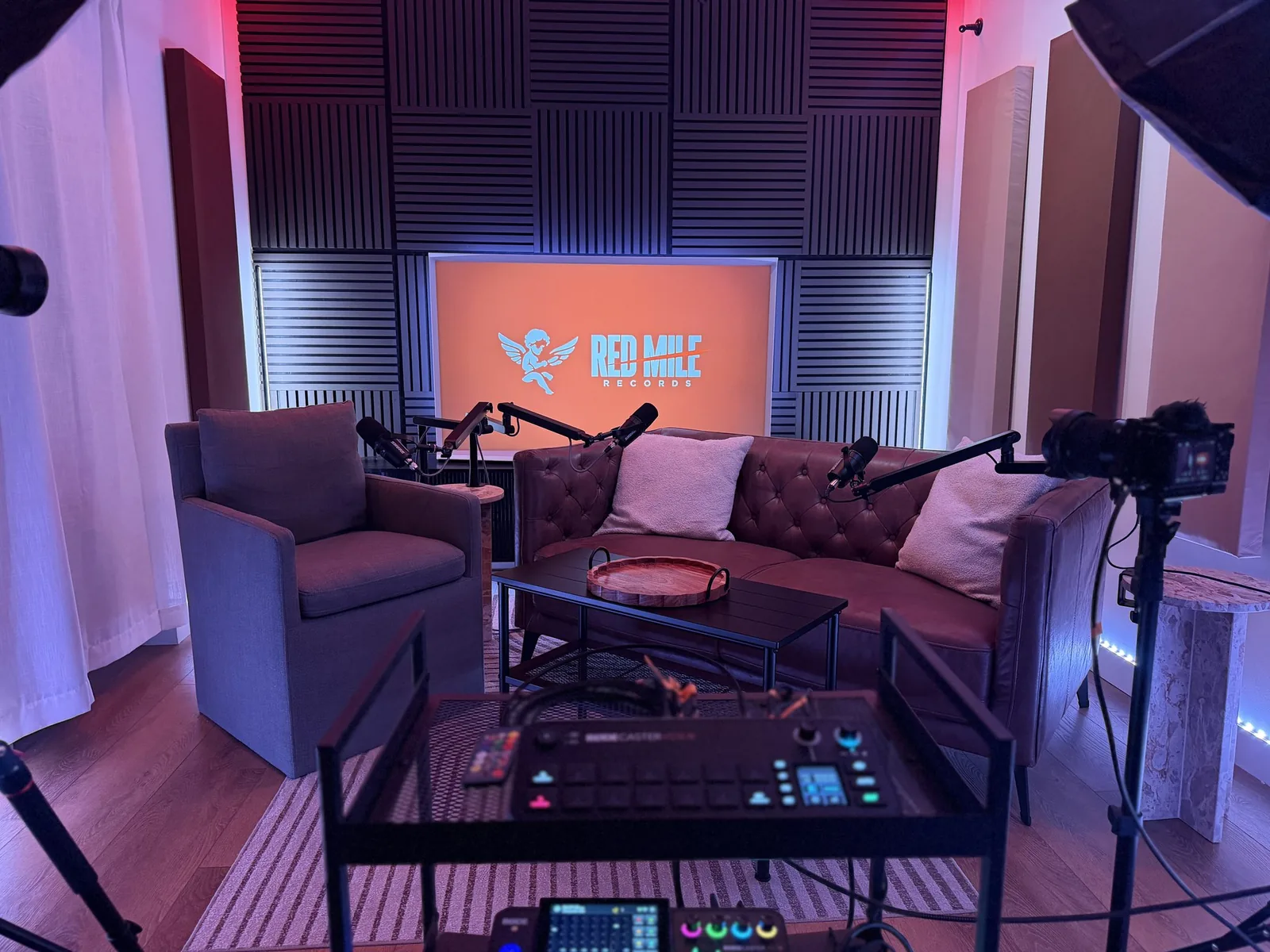
Red Mile Records runs a dedicated podcast studio in Calgary at 1865 17 Ave SW, built for video from the start rather than converted from a music room. Sessions are $100 per hour with a one-hour minimum, an engineer in the room, and seating for up to three guests.
Included in the rate: Shure MV7X microphones, a RodeCaster Pro II mixer with isolated tracks per speaker, 4K multi-camera coverage, studio lighting, headphones for everyone, and acoustically treated walls. You get your files the same day.
For shows recording regularly, memberships start at $350 a month for four hours and run up to a done-for-you Broadcast tier that covers editing, clips, and YouTube management. If you are still deciding whether a show makes sense for your business, our guide to the podcast studio for entrepreneurs walks through the return in detail.
Frequently Asked Questions
Do I need video to start a podcast in 2026?
You do not need video to publish a podcast, but you do need it to be discovered. As of late 2025, 53 percent of new weekly podcast listeners in the US said they prefer watching a podcast rather than only listening, and YouTube is the most-used podcast platform for roughly 42 percent of weekly US listeners. An audio-only show can still succeed, but it gives up the two largest discovery surfaces available: YouTube search and short-form video feeds.
What equipment do I need to record a video podcast?
At minimum you need one dynamic microphone per person, an audio interface or podcast mixer, a camera capable of clean 1080p or 4K, a key light per person, and headphones for everyone on mic. A two-person setup that looks and sounds professional usually means two Shure MV7X or SM7B microphones, a RodeCaster Pro II or similar mixer, two mirrorless cameras such as the Sony ZV-E10 II, and soft key lighting. Audio quality matters more than camera quality, so spend there first.
How much does it cost to start a video podcast?
Building your own two-person video podcast setup costs roughly $1,500 CAD at the entry level, $4,500 to $8,800 CAD for a setup that holds up on YouTube, and $12,000 or more for a multi-camera room with treated acoustics. Renting a studio instead costs $40 to $150 per hour in most Canadian markets, with no upfront investment. Red Mile Records charges $100 per hour with an engineer, cameras, and lighting included.
How long should a video podcast episode be?
Between 25 and 50 minutes works for most interview shows. That is long enough to get past the surface of a topic and short enough to fit a commute, a workout, or a lunch break. Length matters far less than pacing. A tight 30-minute episode outperforms a meandering 90-minute one every time, and the clips you cut from a well-paced episode are far easier to find.
Is it better to record a video podcast at home or in a studio?
If you plan to publish weekly for more than a year, building your own room eventually costs less per episode. A mid-tier build breaks even against studio time at roughly 40 sessions, so if you are recording less often than that, or you are still testing whether the show will stick, a studio is cheaper and faster. Studio sessions also remove the two things that kill new shows: setup time before every record, and inconsistent audio between episodes.
How many episodes do I need before a podcast gains traction?
Plan for at least ten episodes before judging the show. Most podcasts stop publishing before episode ten, which means simply reaching episode eleven puts you ahead of the majority of shows ever started. Traction usually comes from consistency and from clips, not from any single episode, so the first ten exist to establish a format, a publishing rhythm, and a library worth clipping.
Ready to record? Book a podcast session at Red Mile Records for $100/hr with an engineer, 4K multi-camera video, and up to 3 guests included. Call (587) 330-0918 or email [email protected].
Sources: Podcast listening, platform-share, and Spotify video-library figures cited above are from Backlinko's podcast statistics roundup (October 2025 data). Equipment prices are Canadian street prices as of September 2026 and will vary by retailer.