You have probably thought about starting a podcast. Every founder, consultant, and solo operator I talk to has the same conversation in their head: I should be doing this, but I do not know where to start, and I do not want to sound amateur. The second concern is the one that matters. A bad-sounding podcast does not just fail to grow. It actively damages the credibility you spent years building.
I run Red Mile Records in Calgary, and our podcast studio handles entrepreneurs, agencies, coaches, and small-business owners alongside musicians. The pattern is consistent. The ones who record in a proper room from the start build an audience. The ones who spend six months fighting echo and USB-mic hiss in a spare bedroom quit before episode ten.
Why a professional podcast studio matters for your business
Your podcast is a trust signal. When a potential client or partner presses play, they form an opinion about you in under thirty seconds. That opinion is shaped by audio quality before a single word registers. Thin, echoey, hum-filled audio says: this person cut corners. Clean, broadcast-quality sound says: this person is serious. You do not get to explain your way past a bad first impression in a medium where listeners skip and never come back.
A professional podcast studio solves the problem at the source. Acoustic treatment kills the room reflections your spare office prints into every recording. Broadcast microphones capture your voice with detail and warmth that a $60 USB mic flattens out. Separate tracks per speaker mean your editor (or you) can fix one voice without destroying the other. You walk out with a file that sounds like the shows you actually listen to.
The real cost of recording at your desk
Desk recordings cost nothing up front and everything over time. You spend two hours per episode fighting gain levels, re-recording intros, and editing out air-conditioner hum. Your guest hears themselves echo and loses their train of thought. The finished file sounds passable on your good headphones and terrible on a car speaker. Three months in, you have twelve episodes nobody finished and a dead show in your feed.
Studio time costs money. At Red Mile, podcast sessions start at $100 an hour. A typical one-hour conversation with setup and teardown runs about ninety minutes of booked time. You leave with broadcast-ready audio, separate tracks, and if you shoot video, three angles of 4K footage and a set of vertical clips for social. Compare that to the hidden cost of the hours you burn fixing a bedroom recording, and the math flips fast.
What a podcast studio built for entrepreneurs looks like
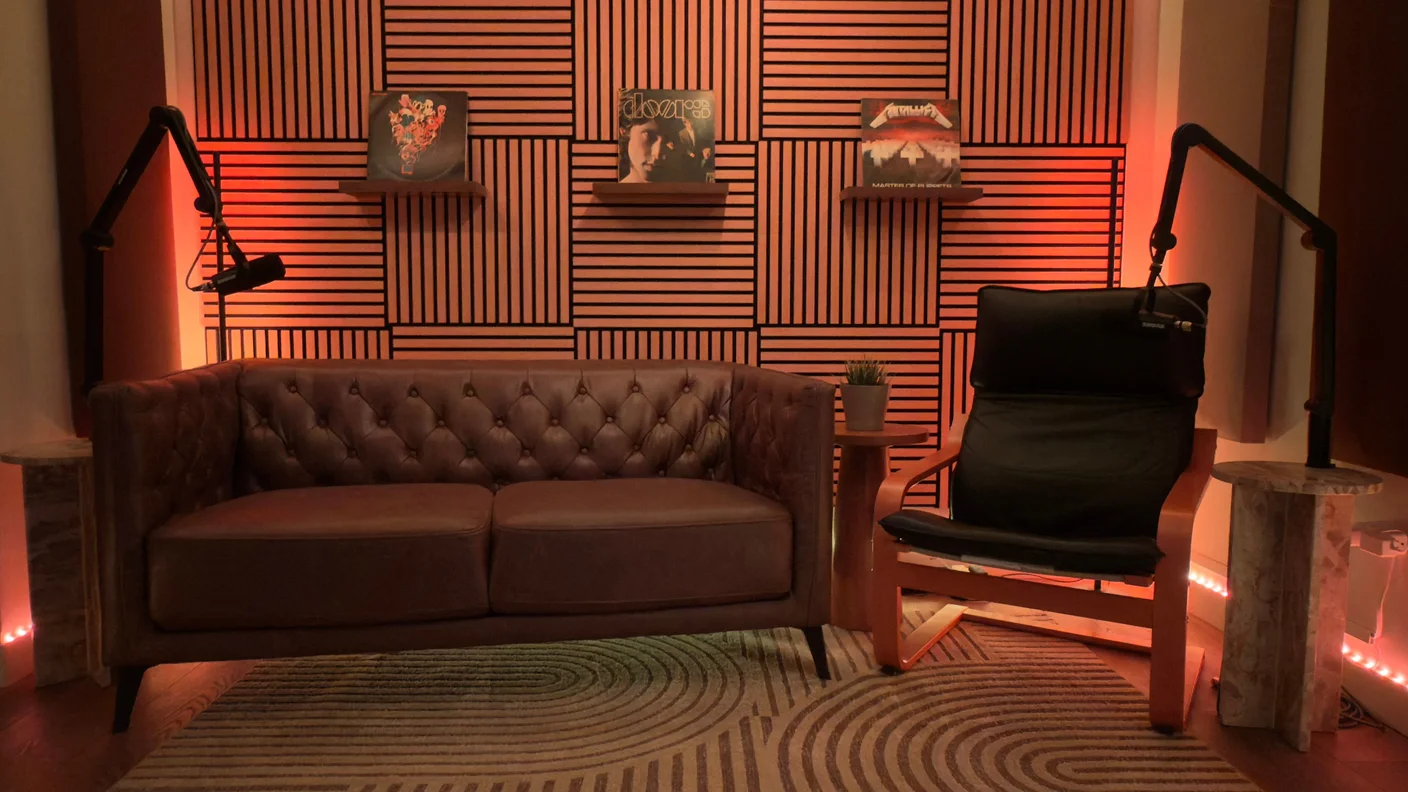
A studio built for talk shows and interviews is not the same room as a music studio, and using a music room for podcasting is a common mistake. Podcast recording needs a controlled, reflection-free space with broadcast-grade spoken-word microphones, not a live room tuned for acoustic instruments.
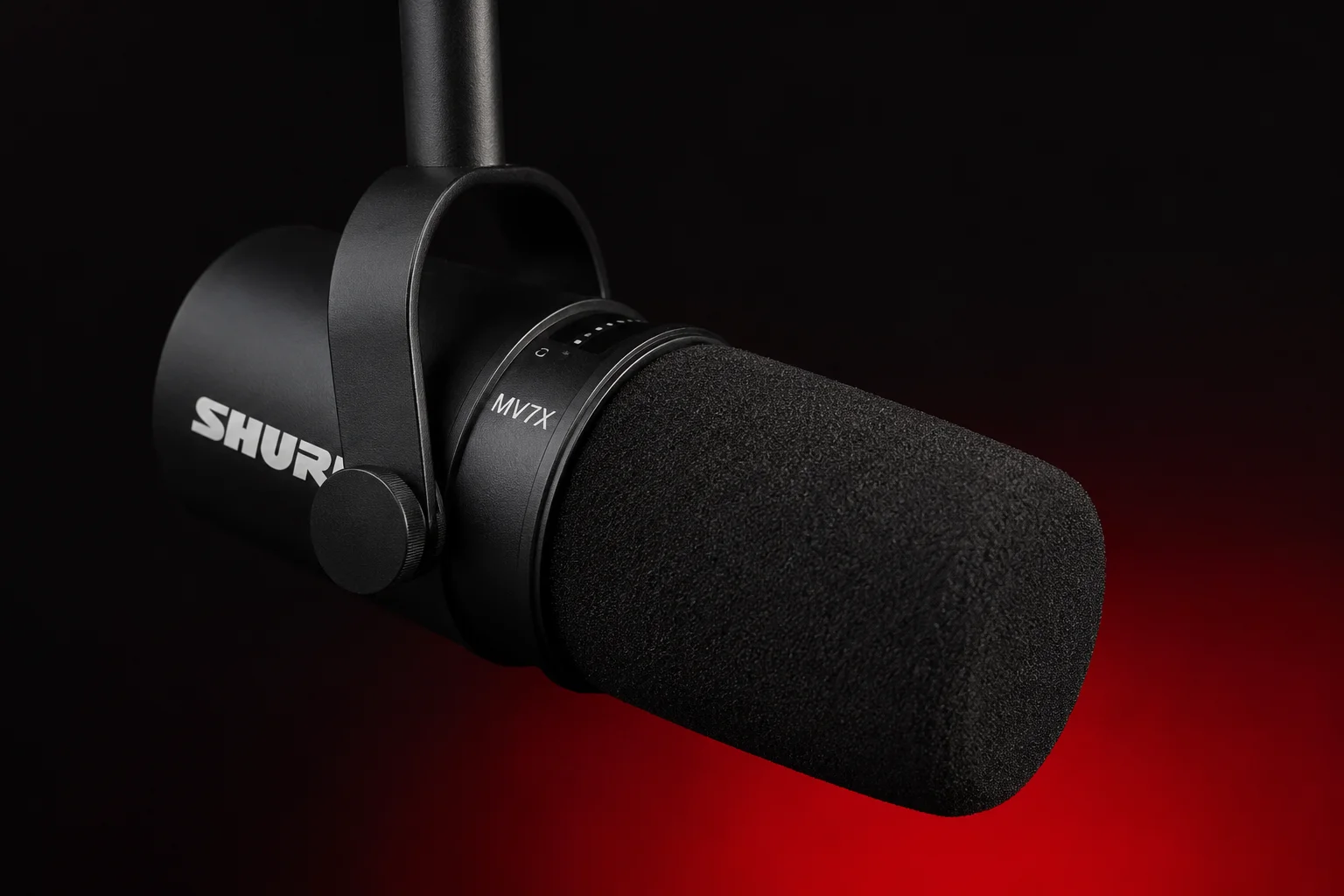
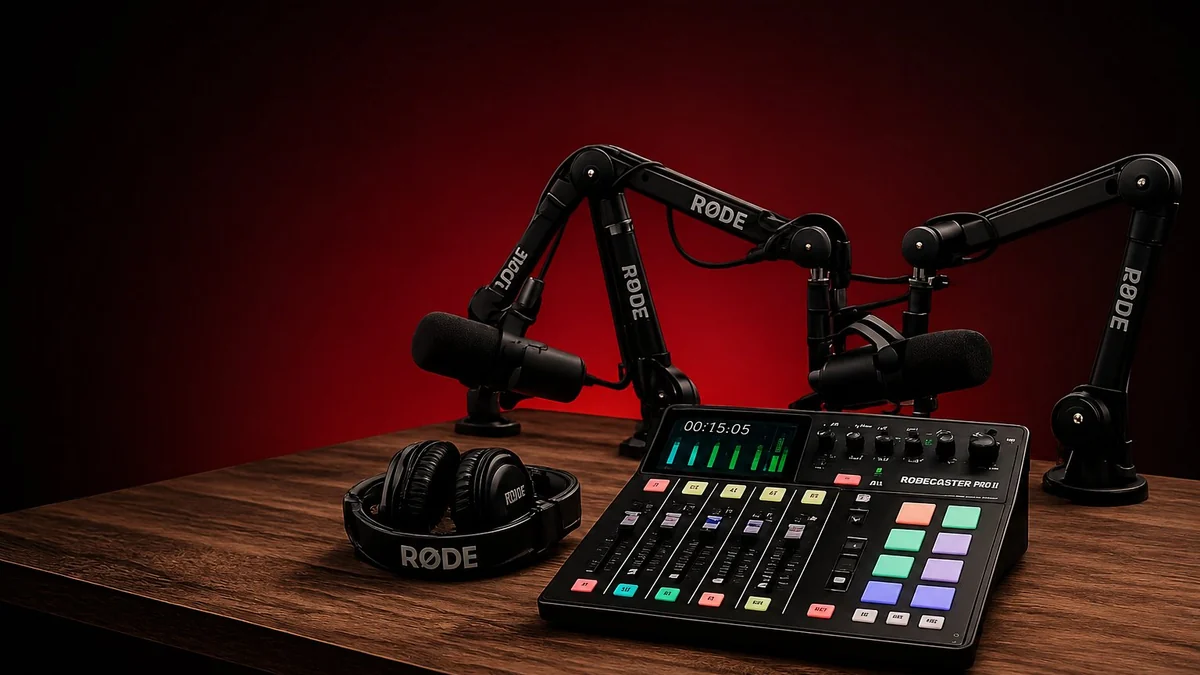
Our podcast setup runs four Shure MV7X broadcast microphones, a RODECaster Pro II mixer, a Universal Audio Apollo Twin interface, and individual headphone monitoring for up to four guests. The room is acoustically treated to kill reflections without sounding dead, so your voice sounds natural and present. For video episodes, we run three 4K USB-C cameras with studio lighting and a clean backdrop, and we can cut vertical clips for TikTok and Reels before you leave.
Video podcasting changed the game for entrepreneurs
If you launch a podcast in 2026 without video, you are leaving the biggest growth channel on the table. YouTube is the number-one podcast platform by reach. LinkedIn rewards native video. TikTok and Reels reward short, punchy clips. One sixty-minute studio session gives you a full audio episode, a full video episode, and ten to fifteen short-form clips. That is a month of content from a single morning.
Recording video at your desk is possible. Recording video that makes you look credible is harder. Controlled lighting, a clean backdrop, and three camera angles turn a conversation into a show. A ring light and a laptop webcam turn it into a Zoom call with a microphone, and your audience can tell.
When to book a studio vs. build your own
Founders ask me this constantly, and the answer depends on volume. If you are recording weekly and committed long-term, a home setup eventually makes sense. A decent one costs $3,000 to $8,000 in gear alone (microphones, interface, headphones, stands, acoustic panels, camera, lighting), and you will spend months dialling in the room treatment before it sounds right.
For your first ten to twenty episodes, book a studio. You skip the gear investment, avoid the acoustic learning curve, and ship a professional product from day one. You also learn what you actually need before you buy it, which saves you from the pile of equipment gathering dust in every podcaster's closet. Once the show has proven itself and the schedule is locked, build out your own room with confidence.
How to get the most out of a podcast studio session
Studio time is focused time, and a little preparation makes it go twice as far:
- Write a run sheet, not a script. Outline your segments, your key questions for the guest, and your transitions. Over-scripting kills the energy that makes podcasts work.
- Send your guest a short brief the day before: what the show covers, how long it runs, and what to wear if you are filming (avoid thin stripes and busy patterns on camera).
- Arrive ten minutes early. The engineer will set levels and get your headphone mix comfortable before you start, so you are not adjusting mid-conversation.
- Record in blocks. If you fumble a sentence, pause, breathe, and restart the line. Clean edits are easier than rescued ones.
- Ask for separate track exports. If you or your editor need to fix one speaker's audio, isolated tracks make it possible without ruining the other.
Repurposing: one session, thirty days of content
A single recorded episode is raw material, not a finished product. Entrepreneurs who grow their audience treat every session as a content factory. One conversation gives you a full podcast episode on Spotify, Apple, and YouTube. It gives you three to five short-form clips for LinkedIn, TikTok, and Reels. It gives you a blog post (or three) summarized from the transcript. It gives you pull quotes for carousels and static posts. If you batch two episodes in a half-day session, you have enough content to post daily for a month without creating anything new.
Choosing the right podcast studio
Not every recording studio is set up for podcasting, and not every podcast studio is set up for quality. When you are evaluating a space, look for these non-negotiables:
- Acoustic treatment. Bare walls and hard floors mean echo in your recording. Panels, bass traps, and a treated ceiling are baseline.
- Broadcast microphones, not music mics. Dynamic broadcast mics like the Shure SM7B or MV7X reject room noise and handle close-talk naturally. Large-diaphragm condensers pick up everything, including your guest's chair squeak.
- Separate tracks. If the studio records everyone onto one stereo file, you cannot fix individual speakers in post. Separate tracks per mic are standard in any professional setup.
- Video capability. Multiple camera angles, controlled lighting, and a clean background. If you have to bring your own camera, the studio is not ready for video podcasting.
- An engineer who handles the tech. You are there to have a conversation, not troubleshoot a mixer. The studio should handle levels, monitoring, and recording so you can focus on your guest.
Our Calgary podcast studio checks all five. If you are comparing options in the city, our guide to the best recording studio in Calgary covers what to look for across music and podcast production. And if you are curious about the revenue side, we broke down how much money a podcast with 10,000 listeners actually makes.
About the author: Matthew Redenbach is the owner and engineer at Red Mile Records, a professional recording studio, podcast studio, and music marketing company at 1865 17 Ave SW in Calgary's Beltline. He has produced podcasts and recorded music for Calgary and national artists and businesses since the studio opened.
If you have decided a show makes sense and want the practical setup side, our guide on how to start a video podcast covers the equipment, the real costs, and the studio-versus-build decision.
FAQ: podcast studio for entrepreneurs
Do I need a podcast studio as an entrepreneur?
If your podcast represents your business, yes. Listeners judge credibility within the first thirty seconds. Echo, background noise, and a thin microphone tone tell your audience you did not care enough to get the basics right. A professional podcast studio eliminates those problems at the source and gives you broadcast-quality audio and video in a single session.
How much does a podcast studio session cost?
At Red Mile Records in Calgary, podcast studio sessions start at $100 per hour. That covers the room, broadcast microphones, a RODECaster Pro II or RODECaster Video, individual headphone monitoring for up to four guests, and an engineer who handles the technical side so you focus on your conversation.
Can I record a video podcast in a studio?
Yes, and you should. Our podcast studio runs three camera angles, two of them 4K, with broadcast lighting, so you leave with ready-to-publish video for YouTube and short-form vertical clips for TikTok, Instagram Reels, and LinkedIn. Video podcast clips consistently outperform audio-only content for reach and engagement.
What equipment does a professional podcast studio have?
At minimum: broadcast-grade dynamic or condenser microphones, a dedicated podcast mixer or interface, individual headphone monitoring, acoustic treatment to kill echo and room noise, and a recording system that captures separate tracks per speaker. Studios built for video add multiple cameras, controlled lighting, and a clean backdrop.
Should I build a home studio or book a professional one?
For your first 10 to 20 episodes, book a studio. You skip the $3,000 to $8,000 gear investment, avoid six months of acoustic trial and error, and get broadcast quality from episode one. Once you have proven the format and committed to a long-term schedule, investing in a home setup starts to make financial sense.
How do I start a business podcast?
Pick a narrow topic your ideal customer actually cares about, not a topic you want to talk about. Record a short trailer and three episodes before you launch so you have a backlog. Use a professional studio for the recording so the first impression is sharp. Distribute through a host like Buzzsprout or Riverside, and repurpose every episode into at least three short-form video clips for social.
What is the best podcast studio in Calgary for entrepreneurs?
Red Mile Records at 1865 17 Ave SW in Calgary's Beltline offers a purpose-built podcast studio with broadcast microphones, a RODECaster Pro II, three camera angles with two of them 4K, and acoustic treatment, starting at $100 per hour. The studio handles music recording, podcast production, and video content under one roof.