Here is the pattern we watch play out in the studio. A show books a session, records a good hour, publishes it on the Tuesday, and then goes quiet until the next recording. One piece of content every two weeks, from a conversation that took three people half a day to make.
The episode is not the output. The episode is the raw material. A single hour in a podcast room, recorded properly, holds enough usable content to carry a show's entire feed and social presence for a month. Most of it is thrown away because nobody planned to keep it.
This is the workflow we use and the one we hand to clients who edit their own shows. No tools you have to buy, no growth hacking. Just what to capture, what to cut, and roughly how long it takes.
What one hour actually contains
Before the workflow, the arithmetic, because it is the part people get wrong in both directions.
A sixty minute conversation typically yields ten to fifteen cuttable moments: a strong answer, a disagreement, a specific number, a story with a beginning and an end. Of those, six to eight will be strong enough that you would put money behind them. Both numbers are worth knowing, because the first is what you walk out with and the second is what actually works.
If you have seen someone promise thirty clips from one episode, they are counting every moment where somebody said something, not every moment a stranger would stop scrolling for. Six good clips beats thirty weak ones, and the weak ones actively cost you, because the platform learns what your account produces.
Six to eight clips, posted three times a week, is roughly a month. Add the long form episode, the audio, a written piece and a newsletter, and one recording session has filled four weeks.
Record so the episode can be cut up
Repurposing is decided in the room, not in the edit. Three things make the difference, and all three are free.
Keep everything rolling. Do not stop and restart between topics. The moments that work as clips are almost never the ones you planned, and they are very often the thirty seconds after someone thought the question was finished. In our room the cameras and the multi-track run continuously for the whole booking, which means nothing is lost to a stopped take.
Ask for complete thoughts. This is the single highest leverage instruction you can give a guest before you start: answer as if the person listening did not hear the question. An answer that opens with "yeah, exactly" is unusable on its own. An answer that opens with "the reason most people get this wrong is" is a clip before you have edited anything.
Mark the good moments live. Say "that is a clip" out loud, or have someone note the timestamp. Thirty seconds of noting during the session saves an hour of scrubbing later, and you will not remember afterwards. This is the step everybody skips and everybody regrets.
One more thing worth doing if you have video: ask your guest to stay for five minutes at the end and record three short direct to camera answers to questions you already know your audience asks. They cost nothing, they cut clean, and they are the easiest posts you will ever make.
The month, mapped from one session
Here is where a single episode actually goes.
Week one. Publish the full episode to your audio feed and to YouTube. Post the strongest clip the same day the episode drops, and point it at the full episode. Post a second clip midweek and a still image with a pulled quote at the end of the week.
Week two. Two more clips, chosen to be different in tone from week one. If week one was the useful advice, week two is the funny moment or the disagreement. Add the written piece: the episode's argument turned into eight hundred words on your own site, which is the only one of these assets that still works for you in two years.
Week three. Two clips, and the newsletter. The newsletter is not a summary of the episode. It is the one idea from the episode that you can defend in four paragraphs, with a link to the full thing at the end.
Week four. The last one or two clips, and a carousel or a thread built from the episode's list of points if it had one. Then you record again, and week four's recording feeds the next month.
The point of the map is not the specific days. It is that you decide the schedule once, and then every episode slots into the same shape instead of being improvised.
Choosing which moments become clips
The test we use is simple and it is not about quality. It is about whether the moment survives being taken out of the room.
A moment works as a clip if a stranger who has never heard of your show can understand it in the first three seconds and would have an opinion about it by the end. That rules out most of what feels good in the moment: in-jokes, callbacks, anything that depends on the forty minutes before it.
What consistently works:
- A specific number, especially one that sounds wrong at first.
- A flat contradiction of something most people believe.
- A story that completes inside sixty seconds, with a turn in it.
- A clear answer to a question your audience actually asks, delivered in one go.
- Genuine disagreement between two people who both know what they are talking about.
What almost never works, no matter how good it felt: introductions, anything that needs setup, laughter without context, and the part where everybody agrees.
Cut the clip to end on the strongest line, not on the natural pause after it. The instinct to let a moment breathe is right in the long form edit and wrong in a forty second vertical video.
The format rules that actually matter
You do not need to master every platform. You need to get four things right.
Vertical, or reframed properly. A 16:9 clip letterboxed into a vertical feed wastes two thirds of the screen. Either shoot with the crop in mind or reframe so the speaker holds the centre. If you are recording multi-camera, this is much easier, because you can cut to whichever angle crops cleanly.
Captions, burned in. A large share of this is watched with the sound off, and the platforms' own auto-captions are inconsistent and sit wherever they like. Burned in captions that you have checked are not optional at this point.
The first three seconds carry everything. Open on the line, not on the setup and not on a title card. If the strongest sentence is fourteen seconds in, start the clip at fourteen seconds.
Audio quality is the thing people notice without noticing. This is the part we are biased about, so take it for what it is worth: a clip recorded on a proper microphone in a treated room does not sound impressive, it just sounds normal, and a clip recorded in an untreated room sounds amateur even to people who could not tell you why. That judgment happens in about a second and it is not recoverable later.
The assets most shows never make
Clips get all the attention because they are visible. These are quieter and they last longer.
The written piece. Take the episode's central argument and write it properly on your own website. Not a transcript and not show notes. An actual article. This is the only asset in the list that compounds, that search engines and AI assistants can cite, and that still sends you traffic a year later when every clip has long since stopped being served.
Real show notes. Timestamps, every name and title mentioned, every link. It takes fifteen minutes and it is what makes an episode findable by someone searching for the thing your guest talked about rather than for your show.
Audiograms. A waveform over a still image, with captions. Less effective than video, but they work on platforms where video does not, and they cost almost nothing if you already have the clips chosen.
The internal library. Keep every clip you cut, including the ones you did not post, with a note on what is in them. Six months in, that library is what you reach for when you need something to post and have not recorded that week.
How long this actually takes
Honest numbers, assuming a clean recording.
The long form edit is most of the work: two to four hours for a conversational episode where you are cutting dead air, false starts and the one tangent that went nowhere. Each short clip is about fifteen minutes once you know which moment you are cutting, which is why marking them during the session matters so much. The written piece is an hour or two. Show notes and the newsletter, half an hour between them.
So four to six hours the first time, two to three once it is routine. That is per episode, not per week, and it covers a month of output.
If that number is the reason this has not happened yet, the choice is to find the hours, hand it to an editor, or book a room where the editing is part of the arrangement rather than a separate problem.
Doing this in Calgary
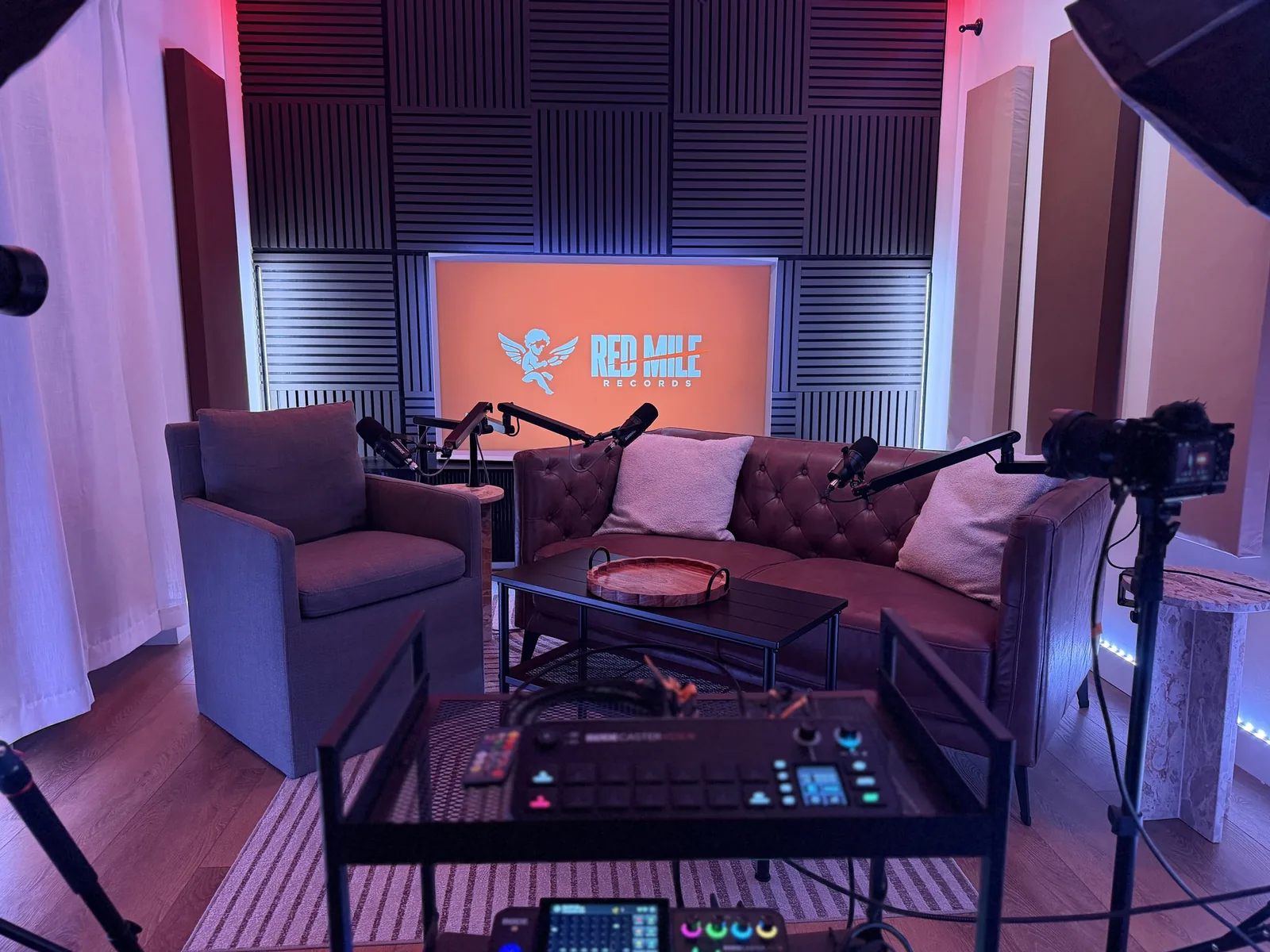
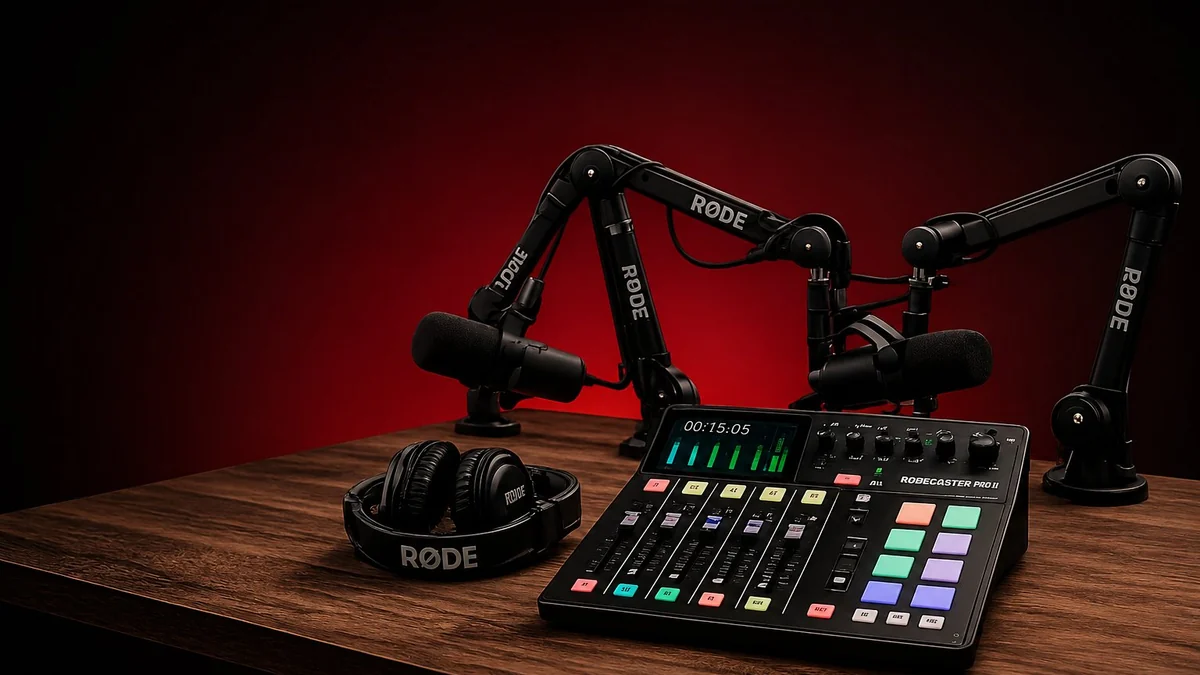
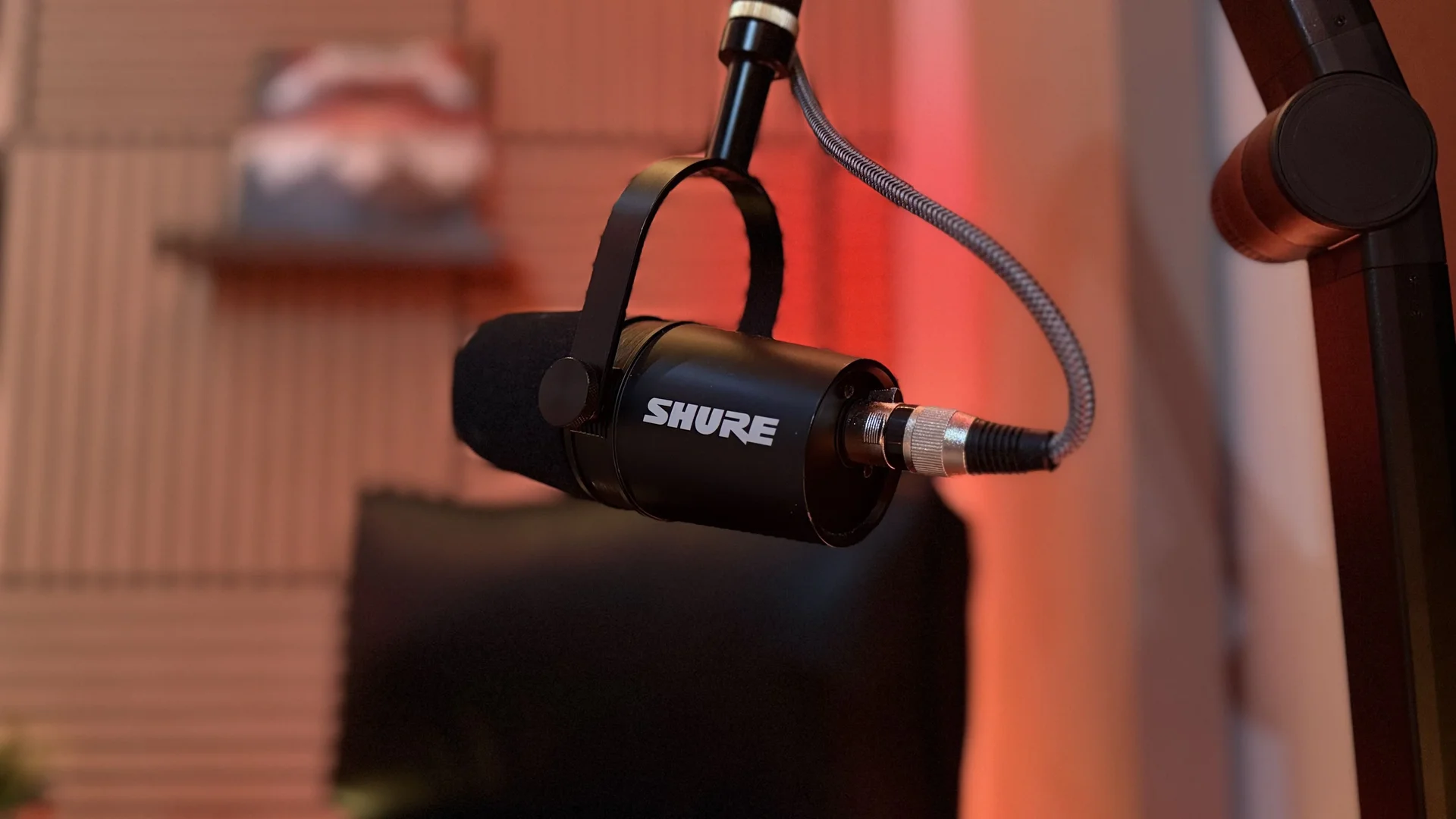
Our podcast room at 1865 17 Ave SW is built for exactly this. Up to four guests, four Shure MV7X broadcast microphones through a RodeCaster Pro II, multi-track capture so every voice can be fixed independently afterwards, and three cameras, two Sony ZV-E10 II shooting 4K plus a Sony a6000, so there are angles to cut between when you are reframing for vertical. An engineer runs the session, which means nobody in the conversation is also watching levels.
Walk-in sessions are $100 per hour. Memberships start at $350 per month for four hours and are the better arithmetic for anyone publishing regularly. The Broadcast tier at $3,500 per month exists for shows that want the whole chain handled: four studio hours, four long form edits, eight short form clips, an ad asset, press placements and YouTube channel management.
If you have not been in the room, book a free fifteen minute studio viewing. No cost and no pitch. Walk it, look at the gear, ask what you want.
If you are still deciding whether a show is worth starting at all, how to start a video podcast covers the gear and the costs, and what a podcast with ten thousand listeners actually earns covers the other side of it.
Frequently Asked Questions
How many clips can you get from one podcast episode?
From a well recorded sixty minute episode, eight to twelve short clips is realistic, and six to eight of those will be good enough to publish. Anyone promising thirty usable clips from one hour is counting moments that will not hold a viewer past three seconds.
Do I need video to repurpose a podcast episode?
No, but it changes what you can do with it. Audio alone gives you audiograms, quotes, a newsletter and a blog post. Video gives you all of that plus the vertical clips that do most of the work on Instagram, TikTok and YouTube Shorts. If growth is the goal, record video.
How long does it take to repurpose one episode?
Budget four to six hours the first time and two to three once you have a routine, assuming the recording is clean. Most of that is the long form edit. The clips themselves take about fifteen minutes each once you know which moments you are cutting.
What should I do during the recording to make editing easier?
Three things. Keep the cameras rolling through the whole conversation so you never lose a moment to a stopped take. Ask your guest to answer in complete thoughts rather than reacting to half a question. And mark the good moments as they happen, either out loud or in a notes app, because finding them later costs far more time than noting them did.
Is it better to post clips daily or in batches?
Consistency beats volume. Three posts a week every week outperforms a burst of fifteen followed by nothing, because the gap is what costs you reach. One episode covers about three posts a week for a month once you count the written piece and the newsletter alongside the clips.
Can Red Mile Records do the editing as well as the recording?
Yes. The Broadcast membership at $3,500 per month includes four studio hours, four long form episode edits, eight short form clips, one ad asset, three press placements and YouTube channel management. Lower tiers cover the room, the engineer and the raw multi-track files, and you or your editor take it from there.