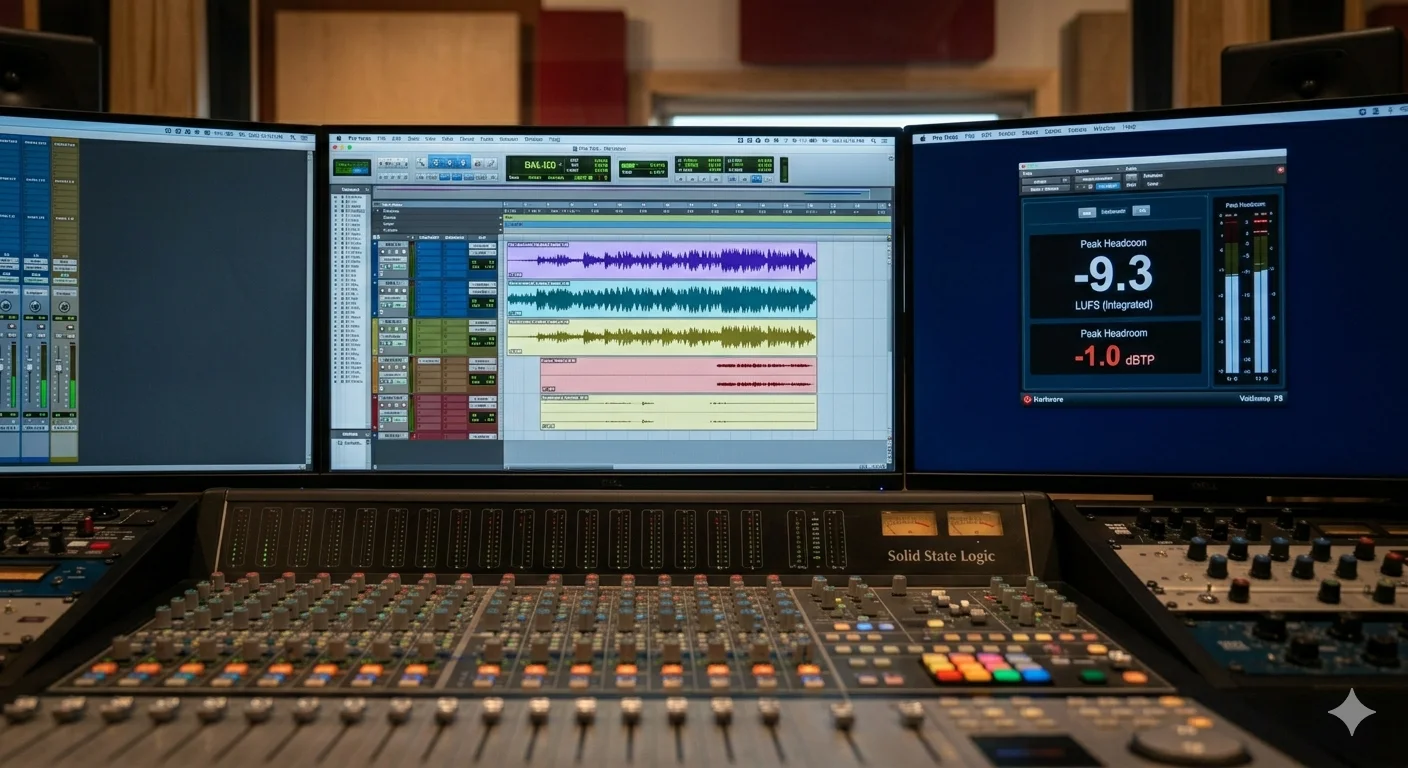
The distance between a home mix and a radio-ready record is not a secret plugin. It is a philosophy and a handful of habits that working engineers use on every session. I run Red Mile Records in Calgary, and I mix for independent artists who keep asking the same thing: why does mine sound smaller than the references? Most of the time it comes down to overthinking, not a lack of gear. Here are five techniques that move a mix from demo to finished, the same ones we use on records here.
1. Calibrate your ears before you touch a fader
Your ears have no baseline when you sit down cold. Mix in that state and you will chase problems that are not there and miss the ones that are. Before any session, play two or three professional tracks in the genre you are working in, at the volume you will mix at. This sets your reference for how much low end, how much air, and how loud "finished" actually sounds.
Keep those references loaded in your session and A/B against them while you work. The goal is not to copy them, it is to stop guessing. When your snare feels weak, the reference tells you whether it really is. Mix at a moderate volume too, around 75 to 85 dB, because loud monitoring flatters everything and lies to you about balance.
2. Use the crank-and-return EQ move
Stop nudging EQ up one decibel at a time and hoping. Boost the band you are unsure about hard, sweep it until you find the frequency that either sings or screams, then pull the gain back until it sits right. Pushing to the extreme first makes the target obvious in a way that timid moves never do, and it teaches you fast where a dull vocal or a boxy guitar actually lives.
This is also how you find the difference between "present" and "harsh." Crank 3 kHz and you hear exactly where presence turns into pain, then back off to the edge of it. That edge is the modern, up-front vocal sound.
3. Work from go-to starting points, then move on
In a real session, time is creativity. The engineers behind records you love do not spend an hour dialing attack and release on a vocal compressor from scratch. They reach for a setting they trust as a starting point, get it 80 percent there in seconds, then tweak from a known place. Learn a handful of reliable starting points for your compressors and EQs so you spend your energy on decisions that matter instead of staring at a menu.
If a move makes the part more exciting, commit and keep going. Momentum is part of the sound. A mix finished in a focused afternoon usually beats one picked at for three weeks.
4. Do not be afraid of additive EQ
The internet will tell you to only cut, never boost. Subtractive EQ is useful for cleaning mud and clashing frequencies, but plenty of the most expensive-sounding records were built by boosting the frequencies that sound good. Cutting is hygiene. Boosting is character. Use both. A few places worth reaching for:
- 8 kHz to 12 kHz: air and sheen on vocals and overheads, the "expensive" top end.
- 2.5 kHz to 4.5 kHz: presence that cuts a vocal through a dense mix.
- 80 Hz to 120 Hz: weight and body on kick and bass, used carefully so it does not eat your headroom.
Use a wide, gentle boost for tone and a narrow cut for problems. Boost broad to flatter, cut tight to fix.
5. Choose excitement over perfection
This is the one that matters most, and it is the hardest for perfectionists. Digital tools make it possible to tune every note dead center and edit every breath out, and a lot of home mixes die exactly there: technically flawless and emotionally flat. Listen to the biggest songs of the last twenty years. Many have a ringy snare, a slightly raw vocal take, a part that is not quite in the grid. They left it because it felt alive. A mix that makes you reach for the volume knob always beats a sterile one that hits every spec.
Where mixing fits in the bigger picture
Mixing only works on what you give it. A clean capture in a treated room gives you a mix that comes together fast, which is the whole argument in what makes a studio recording the best today. After the mix, mastering sets the final loudness and polish for streaming, covered in our loudness guide. If you would rather hand the mix to someone who does this every day, that is our Calgary mixing and mastering service.
Once your mix is done, the job shifts to getting it heard. We cover that in how to get more Spotify listeners and through our music marketing work.
About the author: Matthew Redenbach is the owner and engineer at Red Mile Records, a professional recording, mixing, and mastering studio at 1865 17 Ave SW in Calgary's Beltline. He has mixed for Calgary and national artists including Matthew Douglas, JRDN, and Jhrted.
Frequently asked questions about mixing
How do I make my mix sound professional?
Start by calibrating your ears against professional references in the same genre, mix at a moderate volume around 75 to 85 dB, and make bold EQ decisions instead of timid ones. Use both subtractive EQ to clean problems and additive EQ to add character, and prioritize a mix that feels exciting over one that is technically perfect but flat.
Should I cut or boost when using EQ?
Both. Use narrow cuts to remove mud, harshness, and clashing frequencies, and use wide, gentle boosts to add tone and character. Cutting is hygiene, boosting is character. The myth that you should only ever cut leaves a lot of great-sounding records unmade.
What volume should I mix at?
Mix most of the time at a moderate level, roughly 75 to 85 dB SPL. Loud monitoring flatters everything and hides balance problems. Check your mix quietly and on a few different speakers to confirm it translates before you call it done.
Is it better to mix it myself or hire an engineer?
Mixing yourself teaches you your songs and saves money, but a dedicated engineer brings calibrated ears, fast decisions, and distance from the material. Many artists mix their own demos and bring the releases to a pro. Our mixing and mastering service exists for exactly that handoff.
While you are working on your mix, try our free BPM finder and delay calculator to dial in tempo-synced times.