There's a version of this that sounds obvious in retrospect. You spend months on a track at home, you mix it on your laptop speakers, you upload it, and then you hear it on someone else's system and everything falls apart. The low end is muddy. The vocals are buried. The track that sounded fine in your room sounds amateur everywhere else.
That gap — between what you hear at home and what a professional recording actually sounds like — is what a professional music recording studio is built to close. This article breaks down what makes a studio truly professional, how to record your voice to a professional standard, and what it actually means to operate as a professional artist.
What Makes a Professional Music Recording Studio?
Four things separate a professional recording studio from a bedroom setup — and all four compound each other.
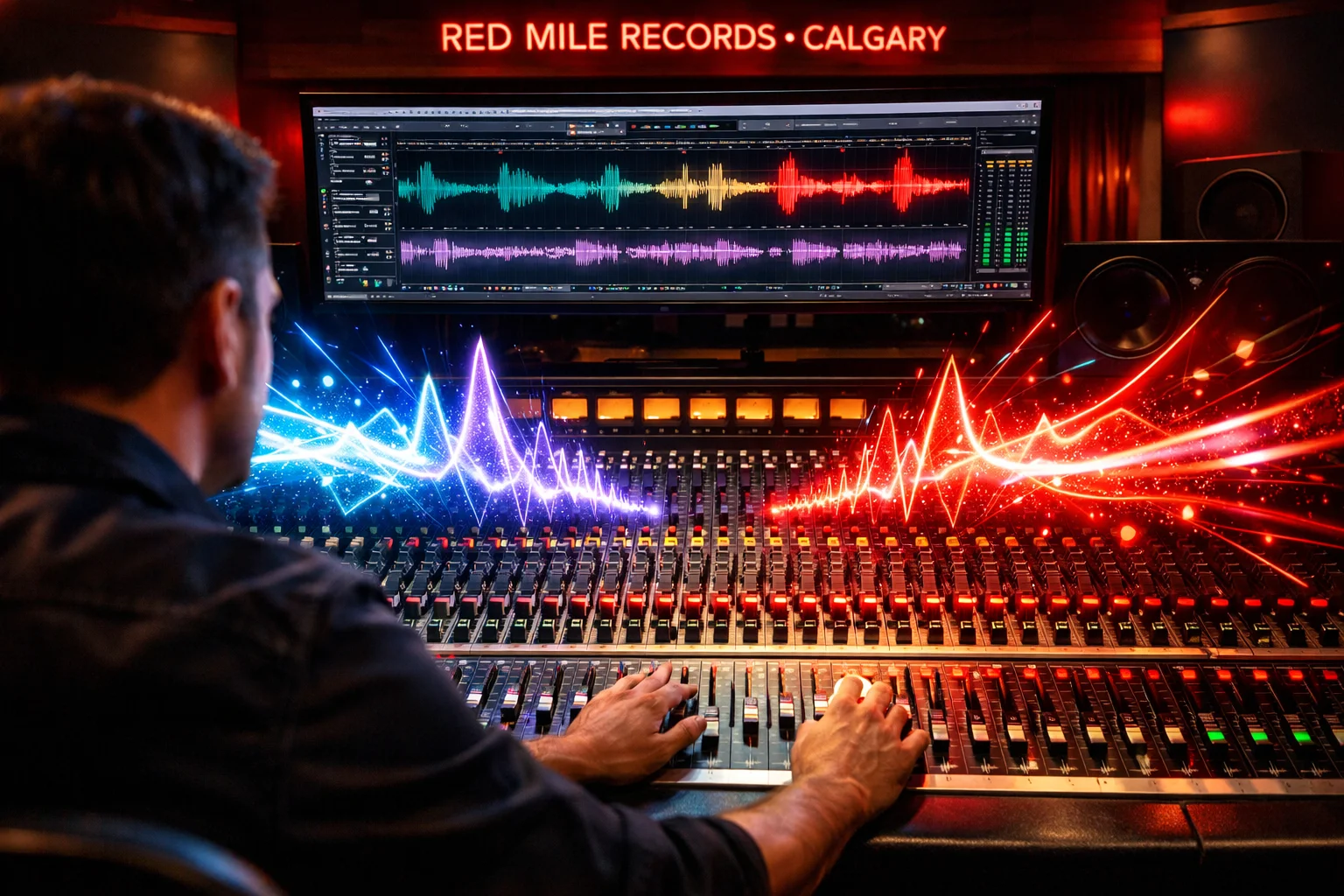
Acoustic treatment. The most expensive microphone in the world will capture the sound of your room before it captures your voice. Parallel walls create standing waves. Hard surfaces create reflections that smear transients. A professionally treated room uses absorption panels, bass traps, and diffusion to control what the microphone hears. At Red Mile Records, our vocal booth is treated specifically for that dead, controlled sound that lets an engineer shape the mix without fighting room artifacts.
The signal chain. What your voice goes through between the microphone and the recording matters more than most artists realize. At Red Mile, the chain runs through Neumann U87 Ai and TLM 103 condenser microphones into Neve 1073LB and Avalon 737SP preamps, feeding a Universal Audio Apollo X6 interface. Every link in that chain is purpose-built for accuracy and warmth. A cheap preamp clips, colors the signal, and adds noise — problems that follow the recording forever.
Monitoring. Mixing decisions are only as good as the speakers used to make them. Our Yamaha HS8 monitors are designed to be honest rather than flattering — they reveal problems in a mix rather than hiding them. When a mix translates well on HS8s, it translates well on everything from earbuds to car speakers to club systems.
The engineer. Gear is nothing without someone who knows how to use it. An experienced engineer understands mic placement, gain staging, how to get a great performance out of a nervous artist, and how to identify and fix problems in real time. The session is as much a coaching environment as a technical one.
How Do I Record My Voice Professionally?
This is one of the most searched questions in music production, and the answer has layers depending on where you're starting from.
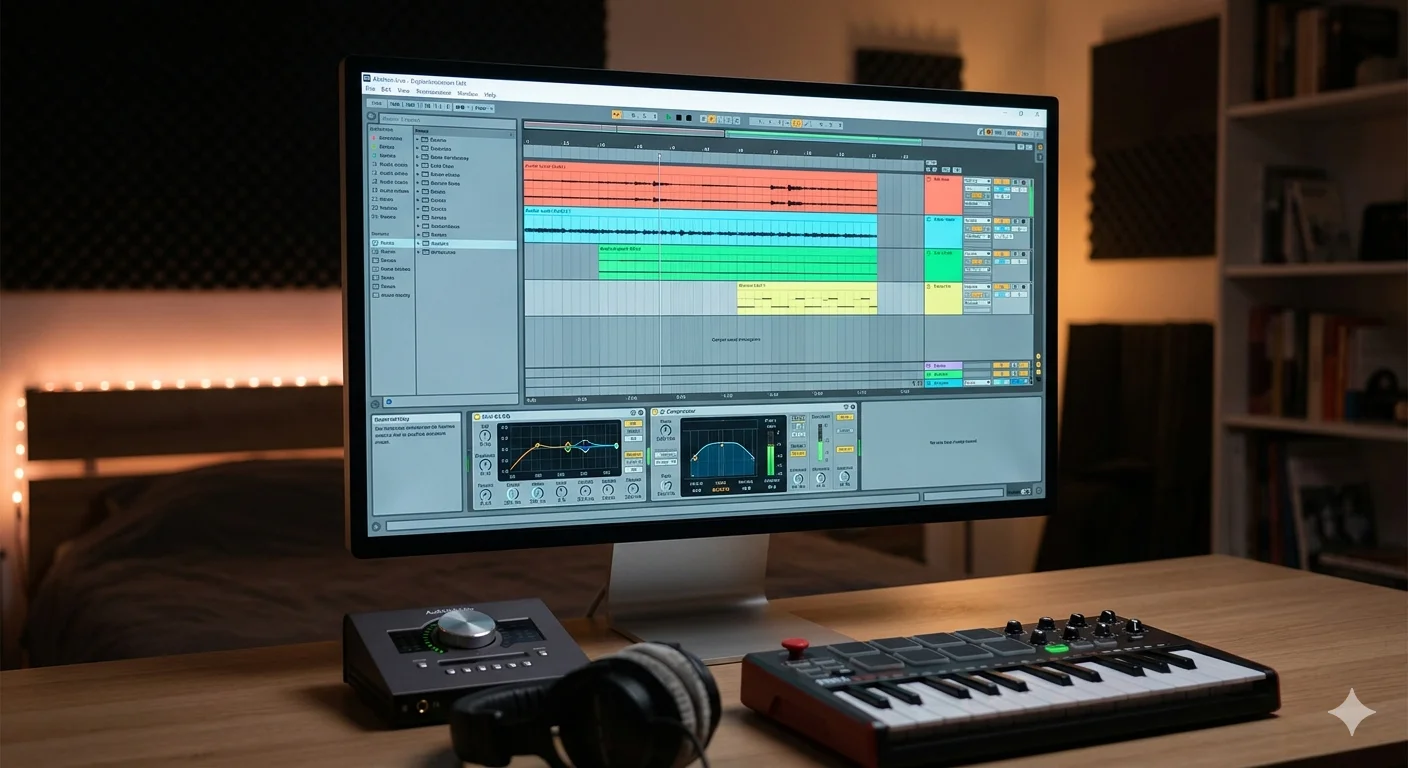
If you're recording at home: The minimum requirements for a professional-sounding vocal at home are a large-diaphragm condenser microphone, a clean audio interface, and some form of acoustic treatment — even hanging a moving blanket behind you reduces reflections meaningfully. Record dry (no reverb on the input), get as close to the mic as your performance allows without proximity effect distortion, and use a pop filter. Monitor with headphones if your room is untreated.
The hard truth: home vocals almost always need professional mixing and mastering to compete with commercial releases. The treatment limitations of a home environment show up in the mix stage, and a skilled engineer can compensate for some of it — but not all of it.
If you're recording in a professional studio: Your job is to perform. Show up warmed up, with your lyrics memorized or clearly marked, and having listened to the reference track enough times that you know exactly what you're going for emotionally. The engineer handles the technical side. The best recordings happen when artists trust the process and focus entirely on the moment of the take.
At Red Mile Records, we work with artists from their first-ever studio session to seasoned performers preparing label-ready releases. First-timers often spend 20–30 minutes of their session getting comfortable — and that time is worth it. The best vocal take you've ever recorded usually comes from your most relaxed state in front of a microphone.
What Qualifies Someone as a Professional Artist?
This question comes up constantly, and the answer has nothing to do with how much money you make from music. A professional artist is defined by their approach, not their income bracket.
Consistency over inspiration. Amateur artists record when they feel like it. Professional artists maintain a release cadence. That doesn't mean flooding the market — it means treating music like a craft that gets worked on regularly rather than waiting for lightning to strike. The artists who build streaming audiences and loyal fanbases do it through volume and consistency over time.
Finished work. Professionals release. An artist with 200 unfinished demos and no releases is a hobbyist. Finishing tracks, getting them mixed and mastered to a professional standard, and putting them out — even before you feel ready — is what separates aspiring artists from working ones.
Investment in quality. Booking a professional recording session in Calgary is not a luxury — it's an infrastructure decision. Your recordings are your product. Releasing music recorded in an untreated room on a USB microphone tells listeners something about how seriously you take your craft. The barrier to entry for streaming is zero, which means the bar for standing out is entirely about quality.
Understanding the business. Professional artists know their streaming numbers, understand what Spotify playlist promotion does and doesn't do, think about release timing, and approach their music career with the same intentionality they'd bring to any other professional endeavor. The music business is a business. The artists who last are the ones who learn it.
Why Calgary Artists Choose Red Mile Records
Red Mile Records is located at 1865 17 Ave SW, Lower Unit, Calgary, AB T2T 5W3 — a physical studio with a real signal chain, treated rooms, and an engineer who has worked with artists at every stage of their careers.
We offer music recording sessions on an hourly, half-day, and full-day basis. We offer podcast production for creators who want broadcast-quality audio. We offer professional mixing and mastering for artists who recorded elsewhere and need their tracks finished. And we offer Spotify playlist promotion and YouTube advertising campaigns for artists ready to put real momentum behind a release.
The physical location matters. You can walk in, hear the monitors, meet the engineer, and make a decision with real information. That's a different experience than sending files to a faceless online service and hoping for the best.
If you're a Calgary-area artist ready to make your first professional recording — or a working artist looking to upgrade your production quality — book a session at Red Mile Records or get in touch to talk through what your project needs.