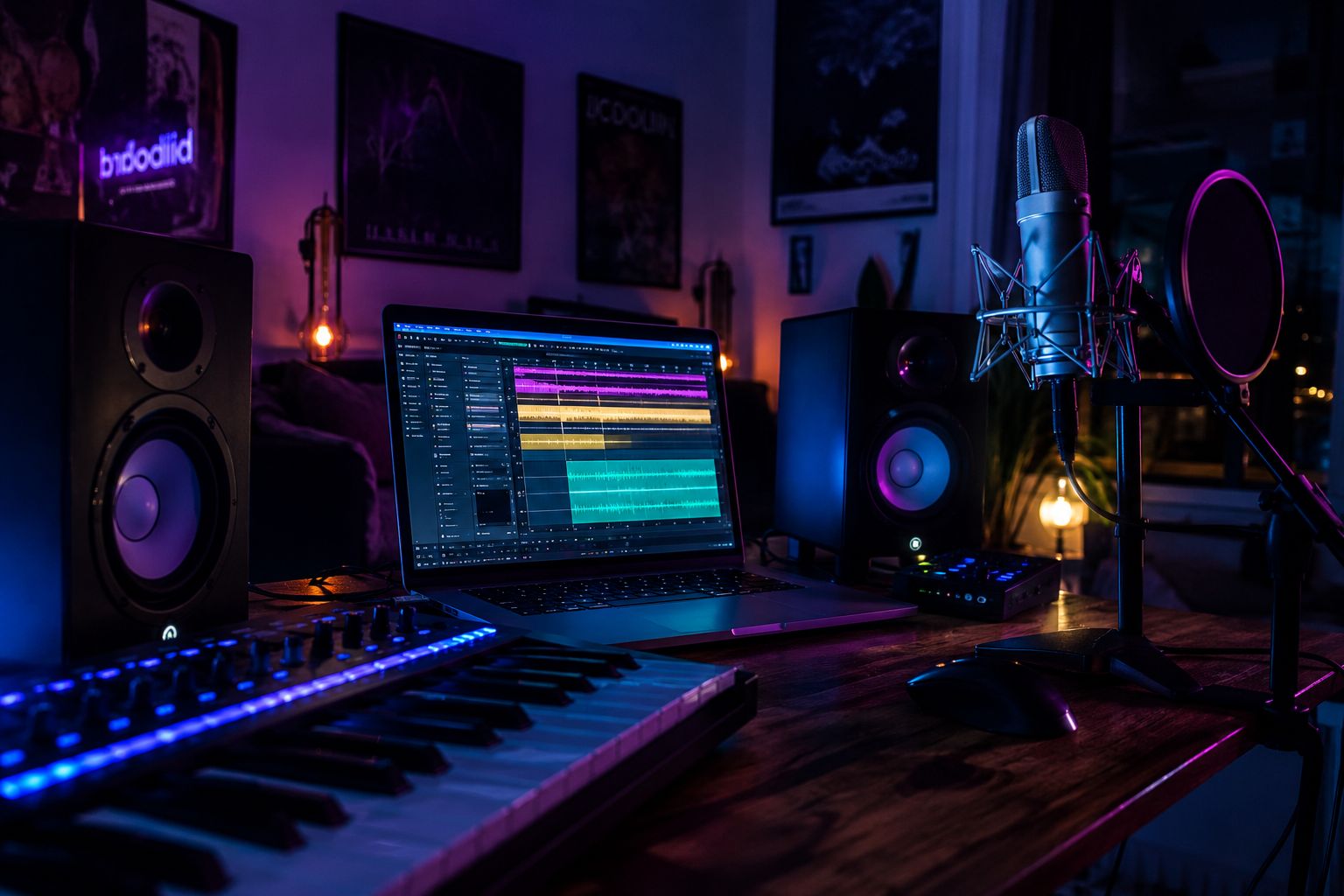
For aspiring music producers and audio engineers, setting up a home studio can feel like learning a completely foreign language. The endless debates online usually circle back to a single, high-stakes question: Should you build your recording studio around a Mac or a Windows PC, and which software should you choose?
With over a decade of hands-on experience in professional music production, the team at Red Mile Records in Calgary has watched the digital audio workstation (DAW) landscape evolve dramatically. While early operating system updates used to cause massive compatibility headaches, today’s technology has bridged the gap.
Most modern DAWs can achieve the exact same professional results. Choosing between them isn’t about which software is "better"—it's like learning a specific dialect of the same language. It ultimately comes down to workflow preference, genre, and what a producer learns on.
For bedroom producers looking to upgrade their skills and eventually transition into a commercial environment like Red Mile Records' studio in the Calgary region, understanding how the "Big Three" DAWs handle Mac and Windows ecosystems is the first step toward a radio-ready sound.
The Operating System Debate: Mac Stability vs. PC Value
Walk into almost any top-tier, professional recording studio in the world, and a Mac will likely be at the center of the control room. Apple has long held a dominant position in the professional audio world due to its user-friendly operating system, stable Core Audio drivers, and industry-wide adoption.
However, Windows PCs remain incredibly popular among bedroom producers for one major reason: value. Building or buying a custom Windows machine is significantly cheaper than purchasing high-end Apple hardware. For an artist just starting out, saving money on the computer means more budget can be allocated to studio monitors, headphones, and microphones.
Fortunately, the old limitations are gone. Historically, certain programs were strictly segregated by operating system. Today, cross-platform stability means creators can run almost any top-tier software on either system. The choice now rests entirely on the workflow.
The "Big Three" Recording Studio Software Contenders
To cut through the noise, home producers should focus on the three industry giants that shape the modern music landscape: FL Studio, Ableton Live, and Pro Tools.
1. FL Studio: The Hip-Hop Beat-making King
Historically, FL Studio was the undisputed king of the Windows PC world, while Mac users were left out in the cold. Thanks to robust software updates over the last few years, FL Studio now runs flawlessly on both Mac and Windows.
The Workflow: FL Studio is famous for its step sequencer and piano roll, making it the absolute go-to choice for hip-hop, trap, and R&B beatmakers.
OS Recommendation: While it runs beautifully on Mac, Windows users still get incredible performance out of FL Studio at a fraction of the hardware cost.
2. Ableton Live: The Creative Powerhouse for EDM
Ableton Live stands out as a personal favorite for many producers at Red Mile Records due to its unparalleled speed and creative flexibility. It is the gold standard for EDM, dance, and electronic music production.
The Workflow: Ableton treats audio like clay, allowing for instant warping, sampling, and live performance manipulation. It behaves less like a traditional tape machine and more like an instrument itself.
OS Recommendation: Ableton is incredibly well-optimized for Mac’s ecosystem, but it runs with equal stability on a high-spec Windows PC.
3. Avid Pro Tools: The Industry Standard for Tracking
If FL Studio is for beats and Ableton is for electronic arrangement, Pro Tools is the undisputed industry standard for recording, tracking vocals, and mixing live instruments.
The Workflow: Pro Tools mimics a traditional analog mixing console. It is designed for handling massive multi-track sessions, elite vocal tuning, and pristine audio editing. It is found in virtually every commercial tracking room.
OS Recommendation: Mac. While Pro Tools is available for Windows, its legacy is deeply rooted in Apple hardware. Professional commercial studios run it on Mac systems to ensure seamless client compatibility and hardware integration.
Bringing the Bedroom Mix to a Professional Calgary Studio
The ultimate goal for many home producers is to take a project started in a bedroom and bring it into a world-class environment to finish the track. Whether an artist creates a heavy hip-hop beat in FL Studio on a custom Windows PC or arranges an intricate EDM track in Ableton Live on a MacBook, the underlying musical principles remain identical.
Understanding these different software "dialects" allows local artists to collaborate seamlessly. When a producer is ready to elevate their sound with radio-ready mixing and mastering services, or pristine vocal tracking in a professionally acoustically treated booth, they can bring those exact session files right into the studio.
At Red Mile Records, the engineers speak all of these software languages fluently. The tech and the tools are there to serve the artist's vision—no matter which operating system they used to start the journey.