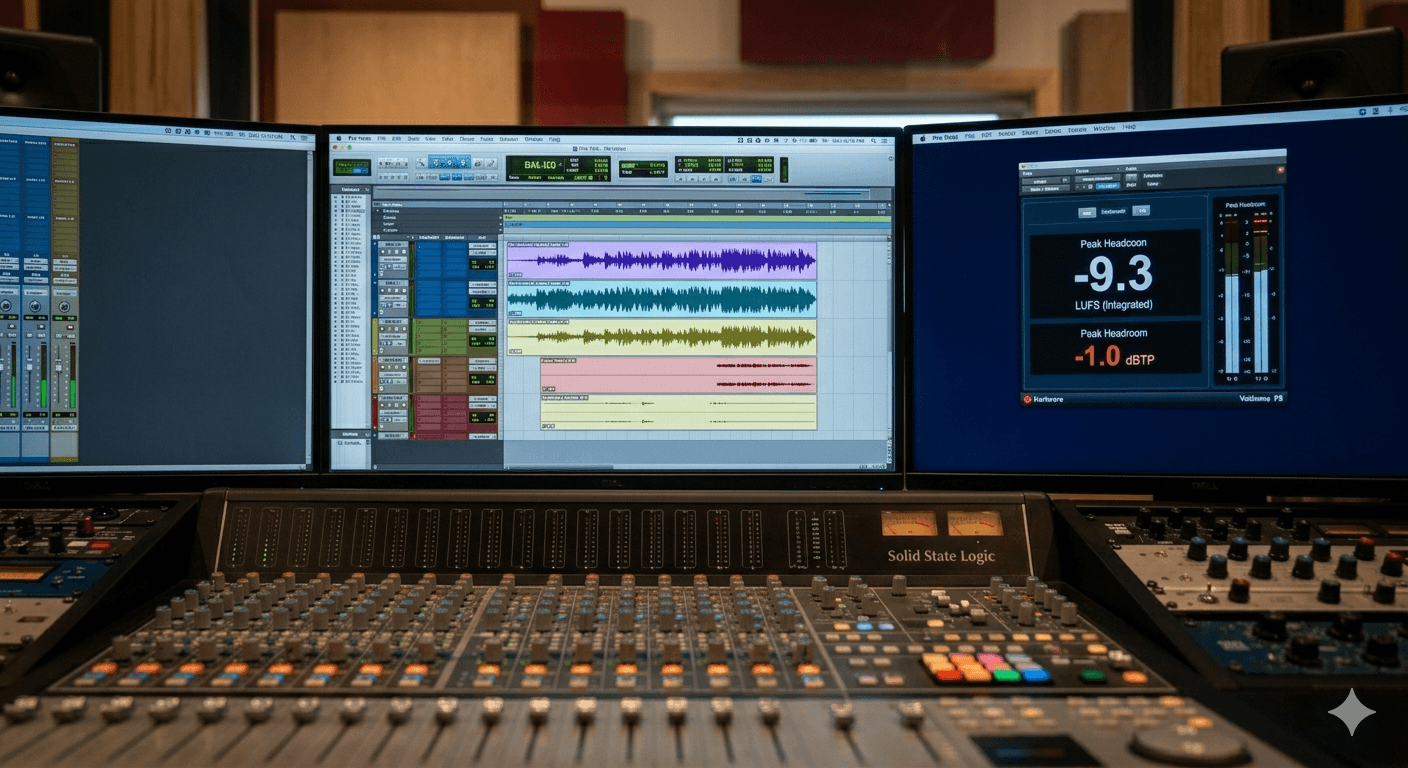
If you are looking for a recording studio Calgary artists trust to get that "radio-ready" sound, you’ve likely heard a lot of conflicting advice about loudness. Between Spotify’s normalization and the technical jargon of LUFS, it’s easy to feel lost.
At Red Mile Records, we believe your music should sound incredible whether it's playing in a car on Deerfoot Trail or through high-end headphones in a professional studio. Today, we’re breaking down the essentials of loudness and why the "rules" you hear online might be holding your music back.
What is Loudness (and why should you care?)
Loudness isn’t just about turning up the volume. It’s about the perceived intensity of your track. In the modern industry, we measure this using LUFS (Loudness Units Full Scale). Unlike traditional peak meters, LUFS tells us how loud a human ear actually perceives the song over time.
For any musician searching for a recording studio in Calgary, understanding this is the difference between a flat, quiet demo and a powerful, commercial-grade master.
The "-14 LUFS" Myth
You may have heard that you must master your tracks to -14 LUFS because that is the streaming target for Spotify and YouTube. Here is the truth: Most professional hits are actually much louder (often between -6 and -9 LUFS).
If you master your track too quiet just to hit a "target," your song might lack the energy and impact of your favorite artists. At Red Mile Records, our mastering services focus on what the song needs for its genre, rather than just hitting an arbitrary number.
Why Peak Headroom (-1dBTP) Matters
While the loudness level is flexible, your True Peak is not. We recommend delivering masters at -1dBTP. This provides a safety buffer. When streaming platforms convert your high-quality file into a compressed format (like Ogg Vorbis or AAC), "codec overshoots" can happen. If your master is already peaking at 0.0, the conversion will likely cause audible distortion.
Professional Tips for Your Next Session
Whether you are recording a full band or a solo project, keep these tips in mind to ensure your track is ready for a professional master:
Don’t over-compress early: Keep your dynamics intact during the mix so the mastering stage has "room to breathe."
Watch the low end: Muddy bass eats up your headroom quickly, making it harder to get a loud, clean master.
Trust your ears over the meter: If it sounds good, it is good. Meters are just tools to confirm what you’re hearing.
Book Your Session at Red Mile Records
Ready to take your sound to the next level? As a premier recording studio Calgary musicians rely on, Red Mile Records offers top-tier recording, mixing, and mastering services tailored to your unique sound. We don't just push buttons; we craft sonic experiences that stand out on every platform.